Renaissance Walnut Geometrically Inlaid Vargueno/Bargueno c.1530-1550.
An incredibly unusual and early example of a Renaissance walnut travelling cabinet known as a Vargueno/Bargueno or ‘escritorio’ c.1530-1550
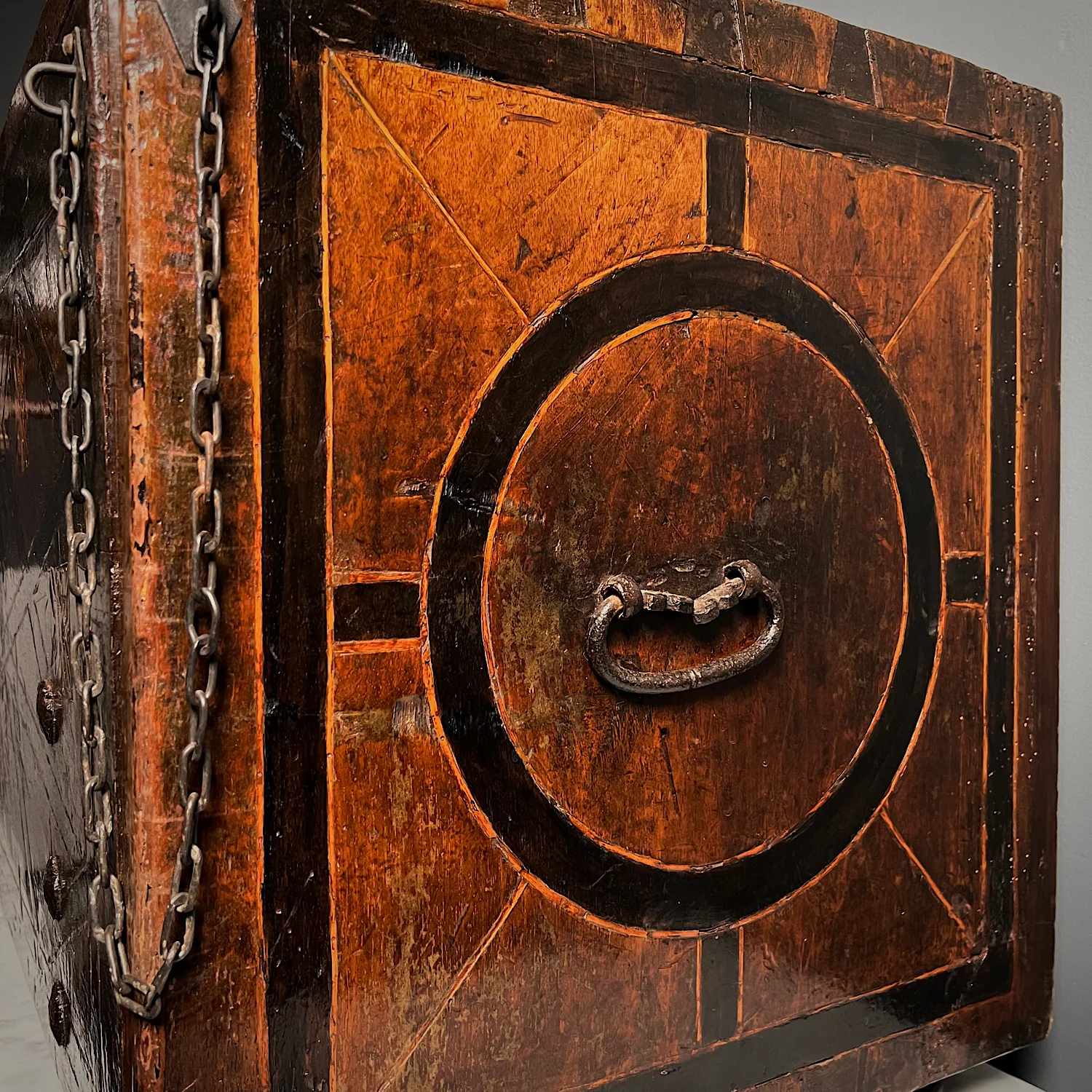
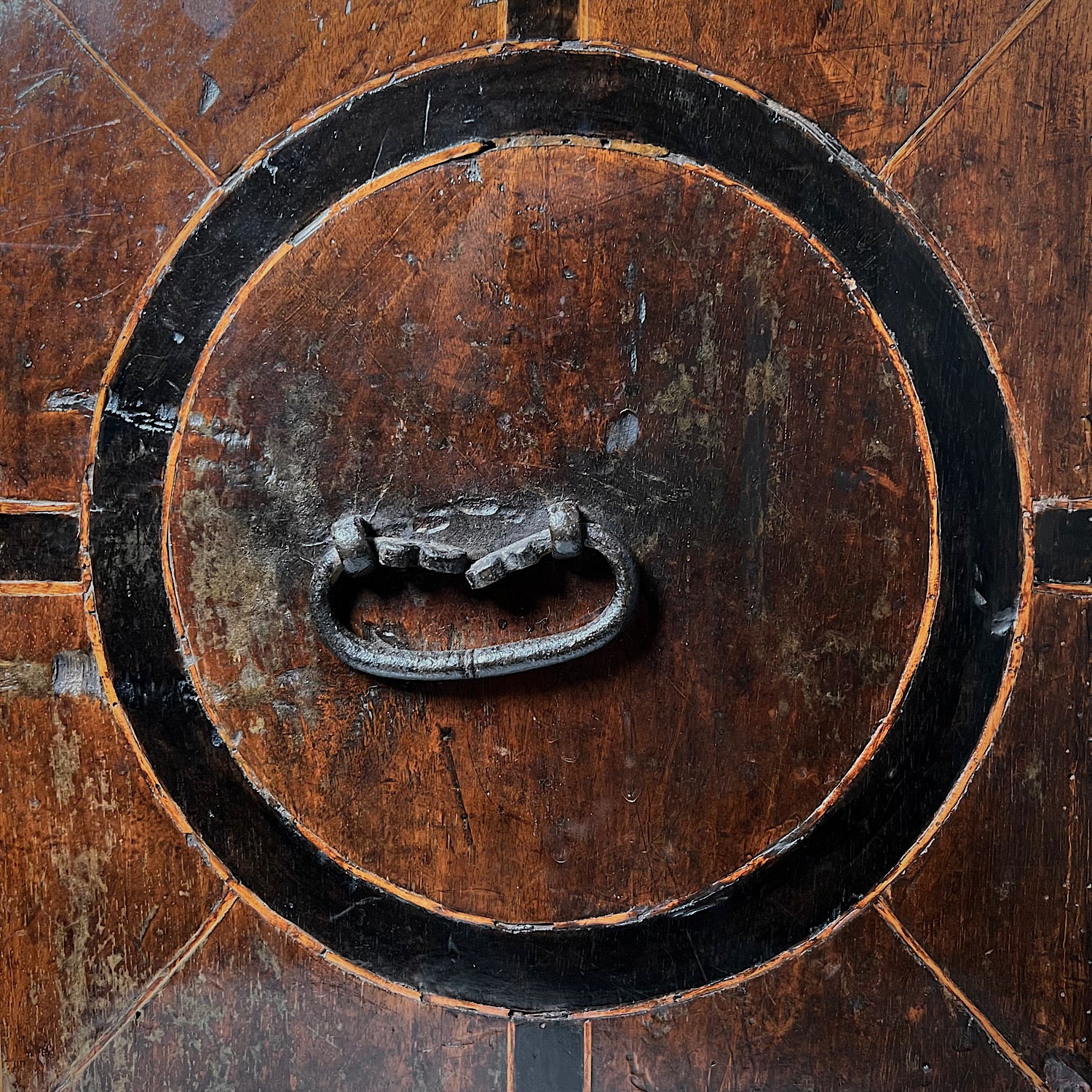
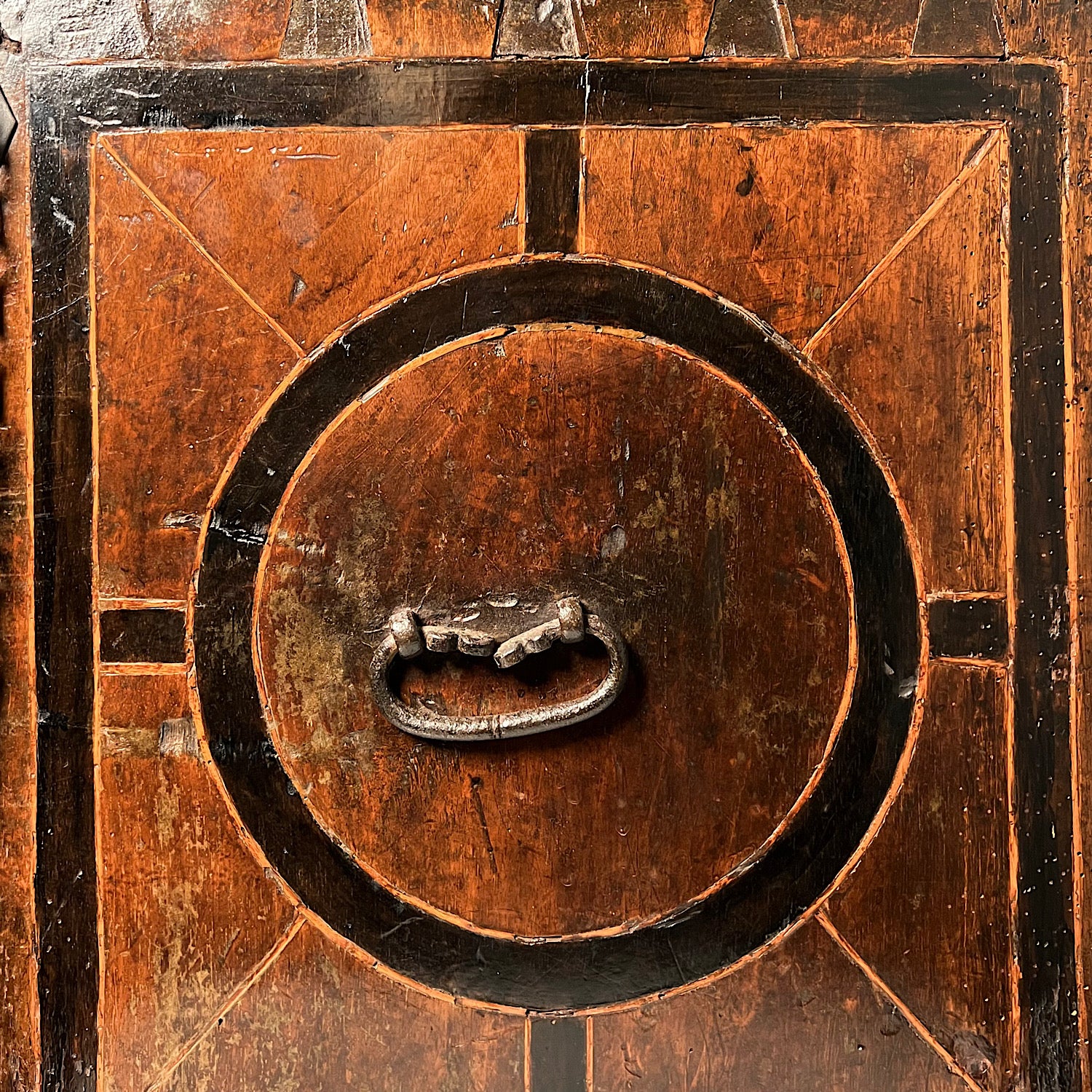
The unusual geometric ebonised inlay of folding ribbons without beginning or end, and the heart shaped central motif to the front of the cabinet suggest a wide range of influences from the mathematical to the romantic.
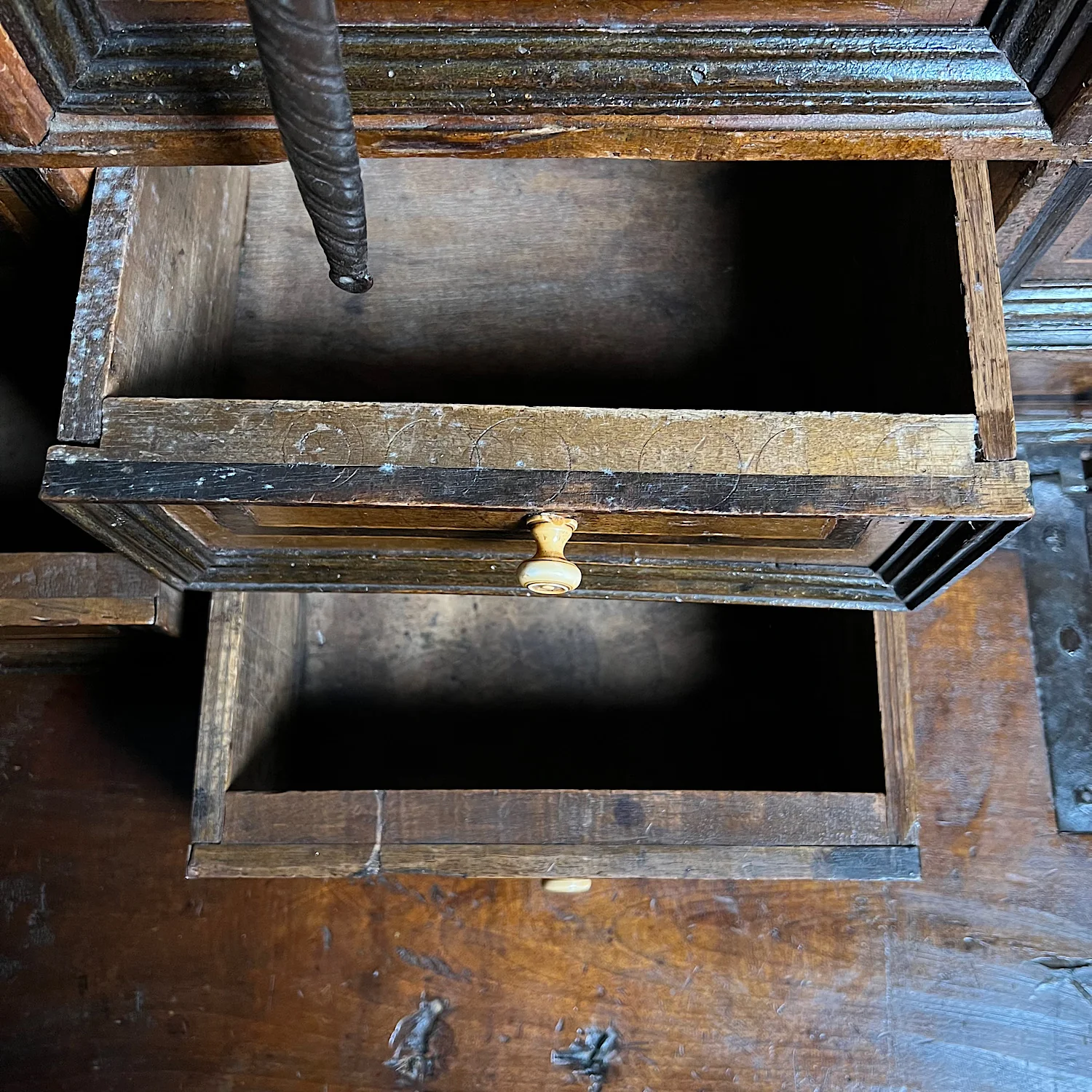
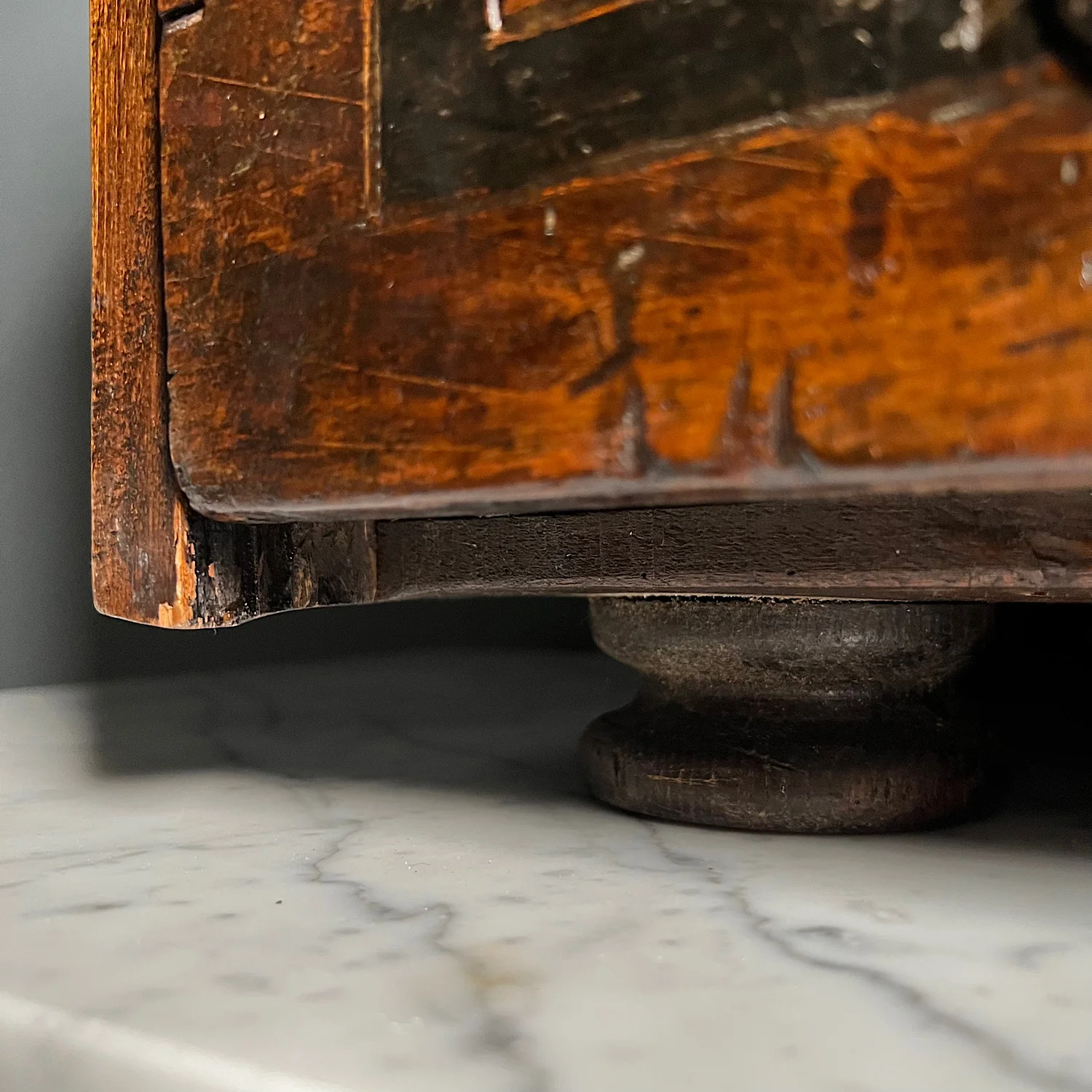
The piece has pyrographic classical acanthus inlaid motifs and iron rivets; a beautifully ornate metal working lock and key. Internally an assemblage of many inlaid plainer drawers with bone handles.
Reminiscent of early forms of ‘intarsia’, the geometric art of inlaid wood popularised in the late 15th to 16th Century. Perspective and complex geometric forms were dramatically and precisely created by the ‘intarsiatori’.
By the late 16th Century cabinets were highly fashionable in Spain, many were imported from Italy, Flanders and Germany.
This particular piece is most likely from Mantua, Italy.
Original: $11,709.02
-70%$11,709.02
$3,512.71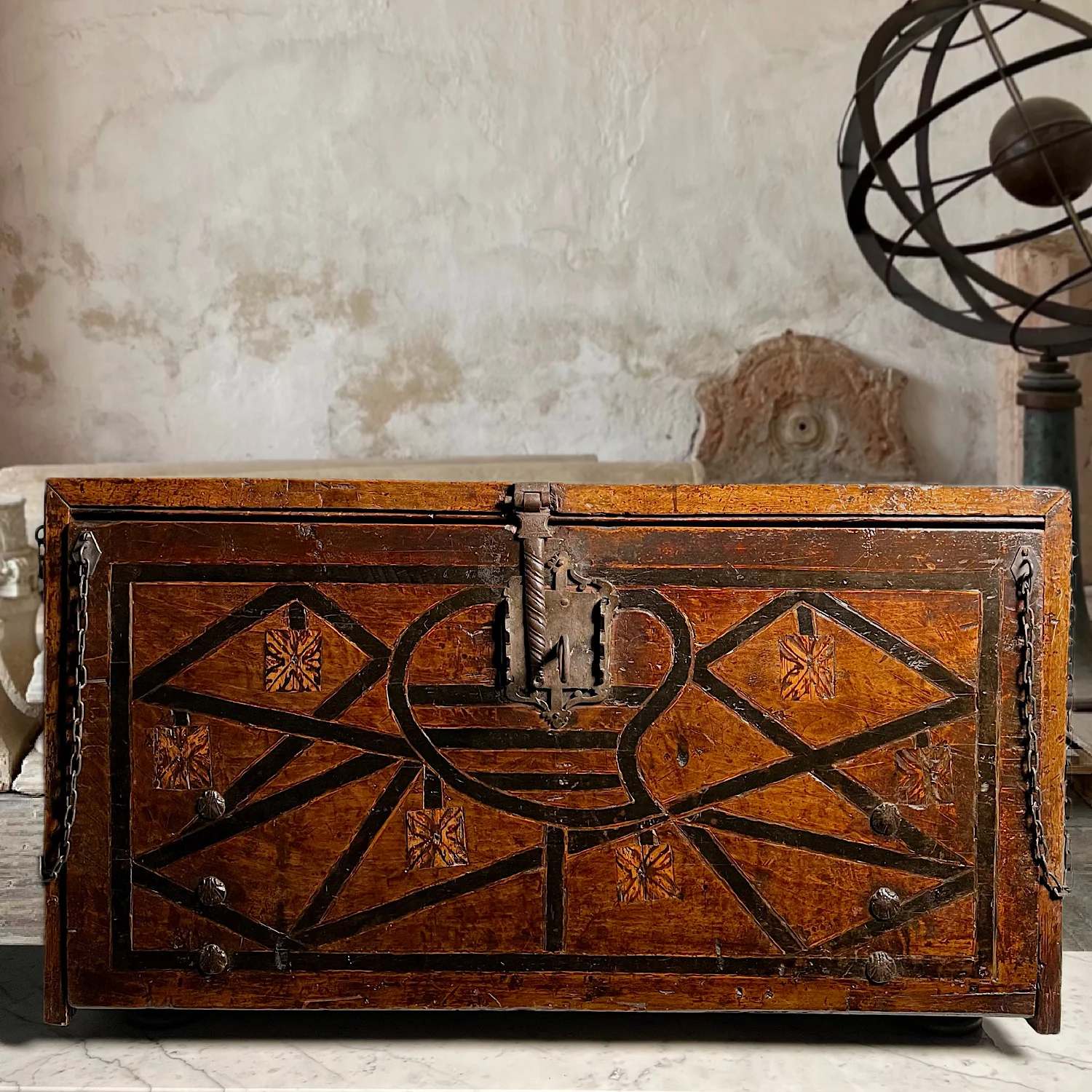







Description
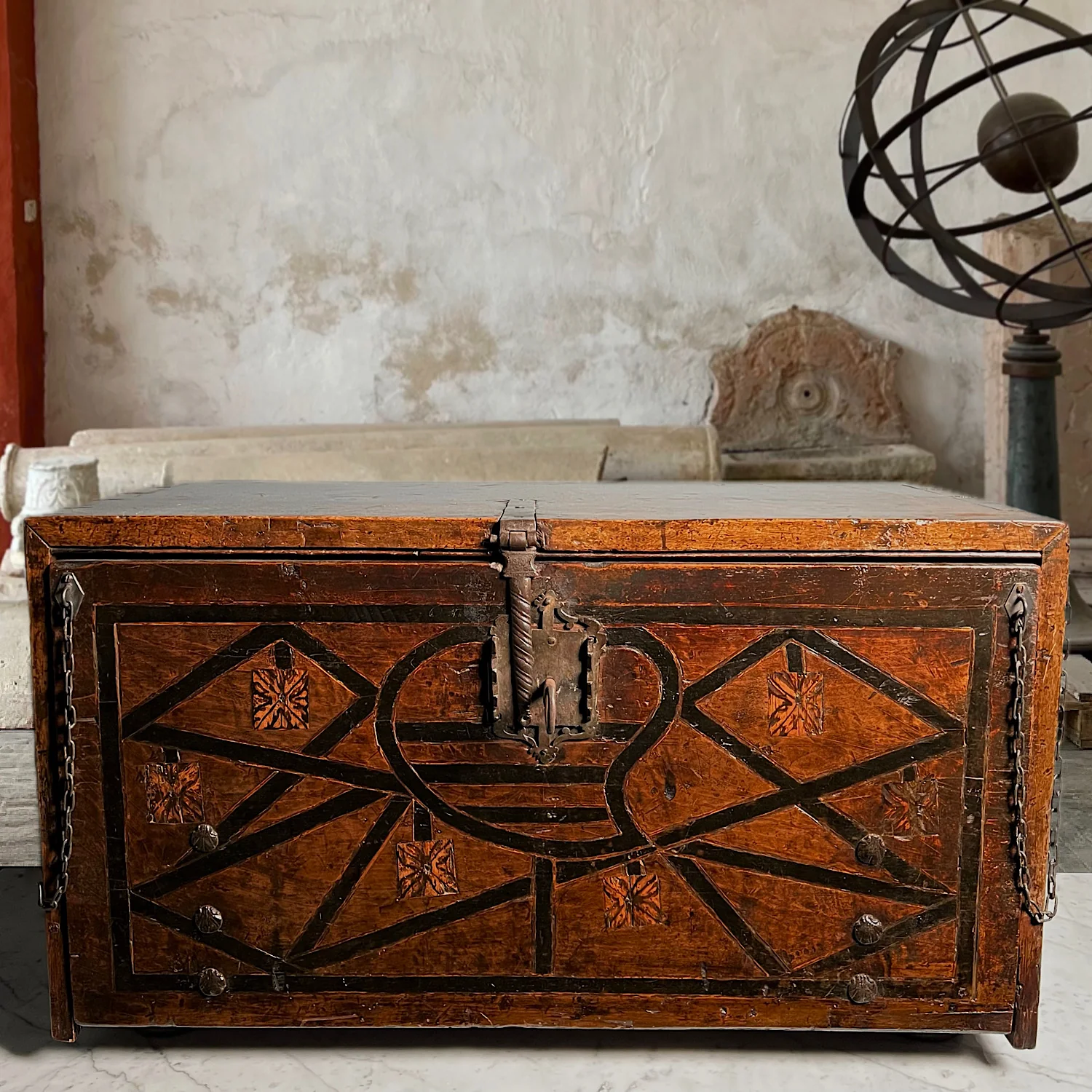
An incredibly unusual and early example of a Renaissance walnut travelling cabinet known as a Vargueno/Bargueno or ‘escritorio’ c.1530-1550
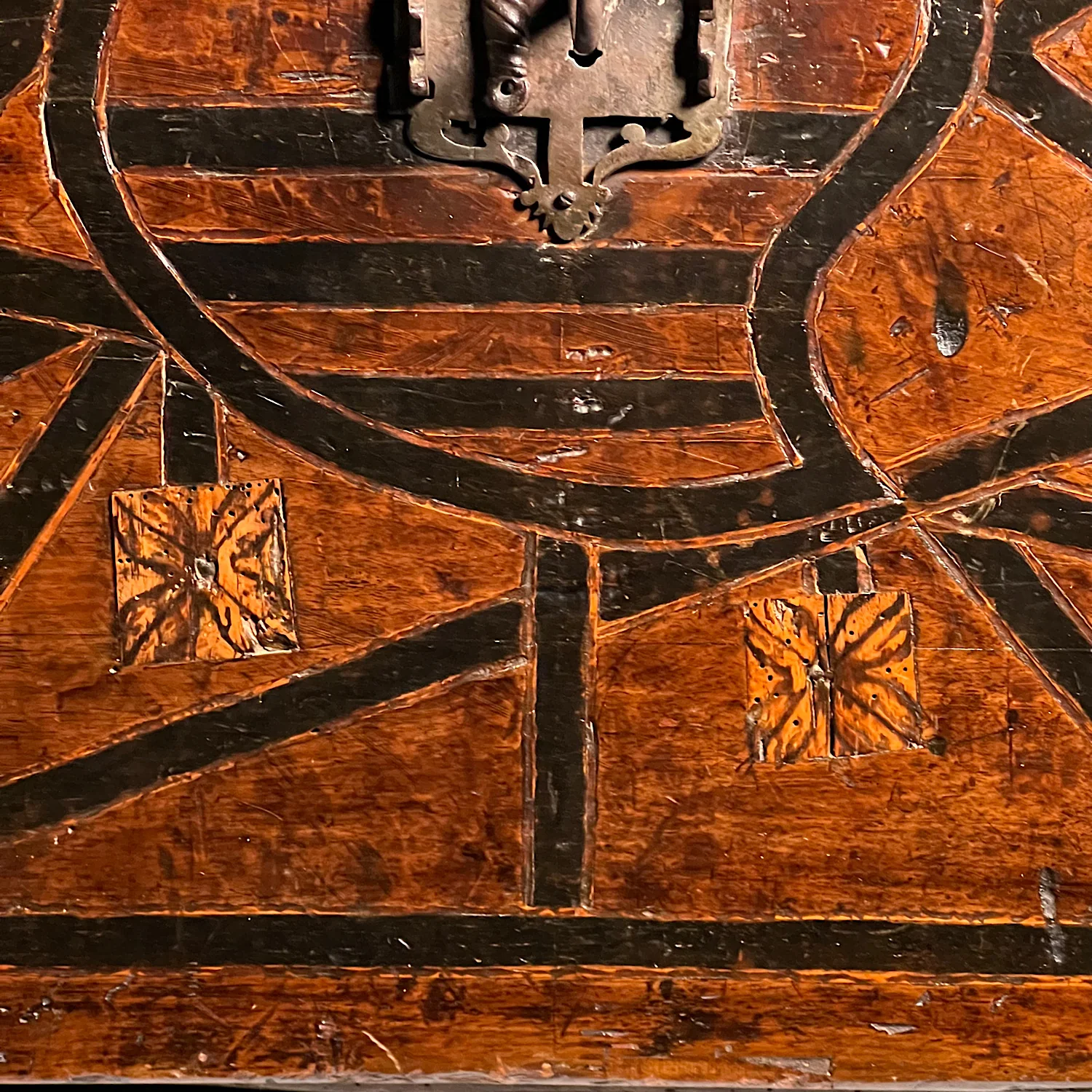
The unusual geometric ebonised inlay of folding ribbons without beginning or end, and the heart shaped central motif to the front of the cabinet suggest a wide range of influences from the mathematical to the romantic.
The piece has pyrographic classical acanthus inlaid motifs and iron rivets; a beautifully ornate metal working lock and key. Internally an assemblage of many inlaid plainer drawers with bone handles.
Reminiscent of early forms of ‘intarsia’, the geometric art of inlaid wood popularised in the late 15th to 16th Century. Perspective and complex geometric forms were dramatically and precisely created by the ‘intarsiatori’.
By the late 16th Century cabinets were highly fashionable in Spain, many were imported from Italy, Flanders and Germany.
This particular piece is most likely from Mantua, Italy.