Italian Limewood Carving of Saint Paul with Traces of Original Polychrome, c.1480
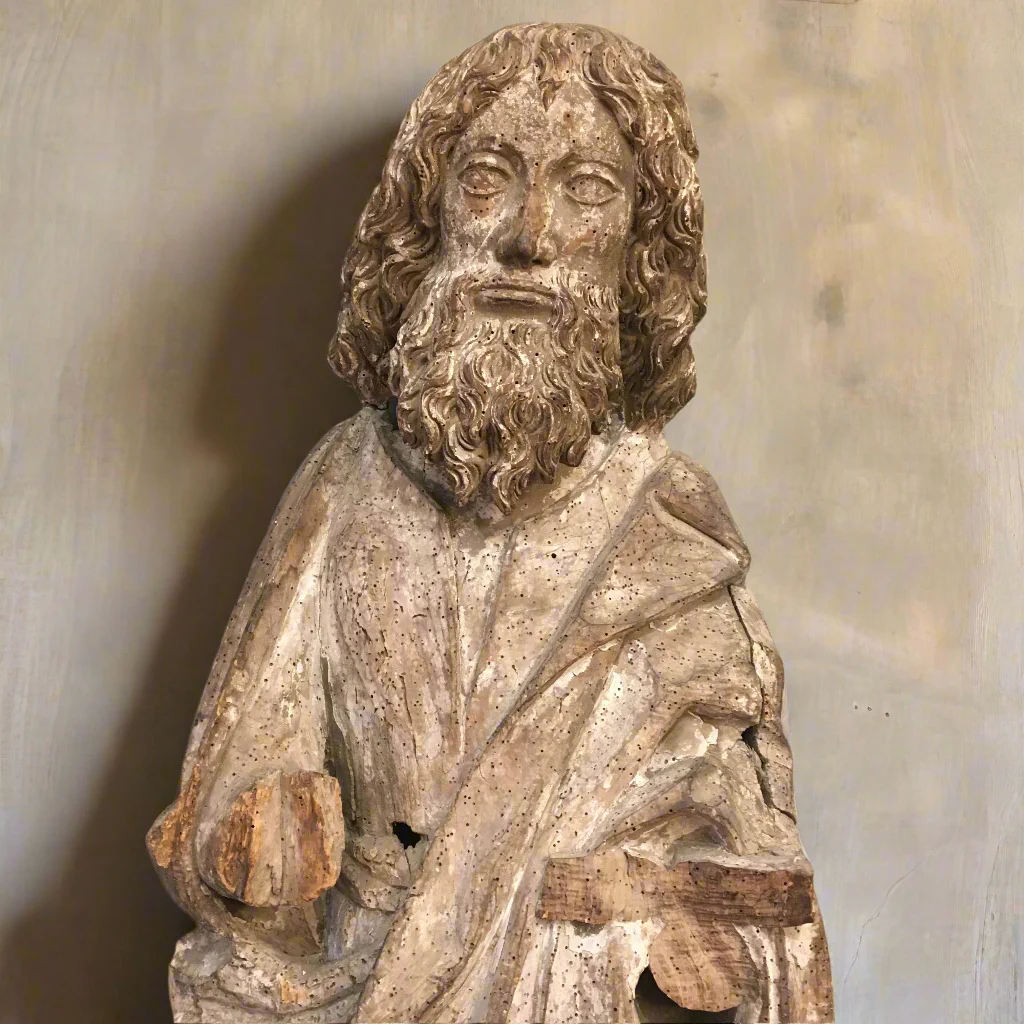
A rare and evocative late 15th-century Italian carving of Saint Paul the Apostle, executed in limewood and retaining traces of its original polychrome surface.
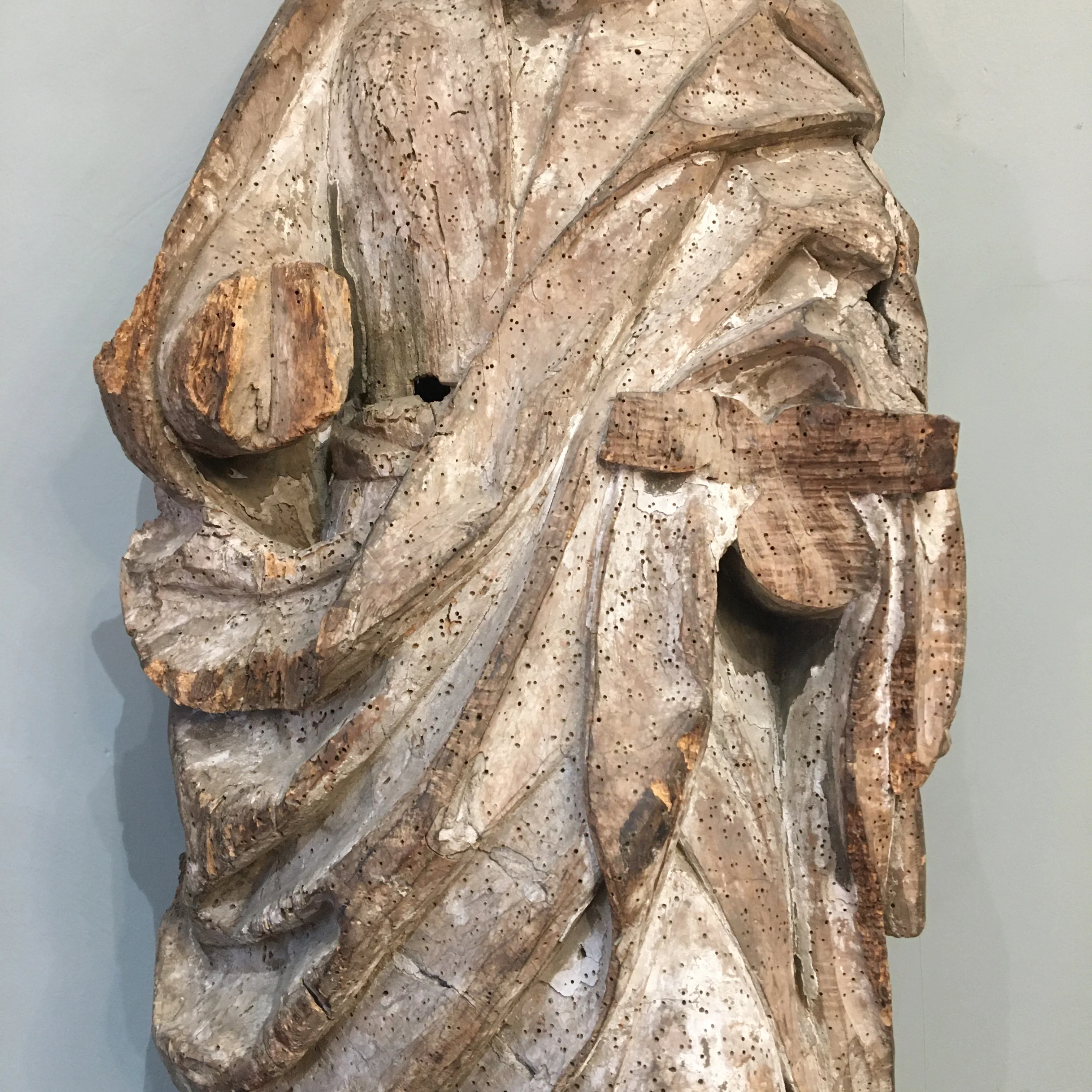
This finely worked figure reflects the transitional moment between the late Gothic and the emerging Renaissance. The sculptor has given Saint Paul a commanding presence, with deeply carved drapery that falls in rhythmic folds and a long, curling beard that lends gravitas to his expression. His left hand clasps a book, symbol of his Epistles, while his right hand most likely once held a sword – his traditional attribute – now absent with time.
The surviving pigments, though softened by age, hint at the sculpture’s former vibrancy and devotional impact. The surface has developed a quiet, time-honoured patina, underscoring the piece’s authenticity and centuries of reverence. Figures such as this would have originally stood within a church setting or private chapel, serving as both object of devotion and as an embodiment of sacred authority.
Italian limewood carvings of this date and scale are increasingly scarce. This example, carved around 1480, offers both a striking sculptural presence and an important survival of Renaissance religious art.
Original: $11,176.79
-70%$11,176.79
$3,353.04





Description
A rare and evocative late 15th-century Italian carving of Saint Paul the Apostle, executed in limewood and retaining traces of its original polychrome surface.
This finely worked figure reflects the transitional moment between the late Gothic and the emerging Renaissance. The sculptor has given Saint Paul a commanding presence, with deeply carved drapery that falls in rhythmic folds and a long, curling beard that lends gravitas to his expression. His left hand clasps a book, symbol of his Epistles, while his right hand most likely once held a sword – his traditional attribute – now absent with time.
The surviving pigments, though softened by age, hint at the sculpture’s former vibrancy and devotional impact. The surface has developed a quiet, time-honoured patina, underscoring the piece’s authenticity and centuries of reverence. Figures such as this would have originally stood within a church setting or private chapel, serving as both object of devotion and as an embodiment of sacred authority.
Italian limewood carvings of this date and scale are increasingly scarce. This example, carved around 1480, offers both a striking sculptural presence and an important survival of Renaissance religious art.