18th Century Medieval Stained Glass Window Roundel
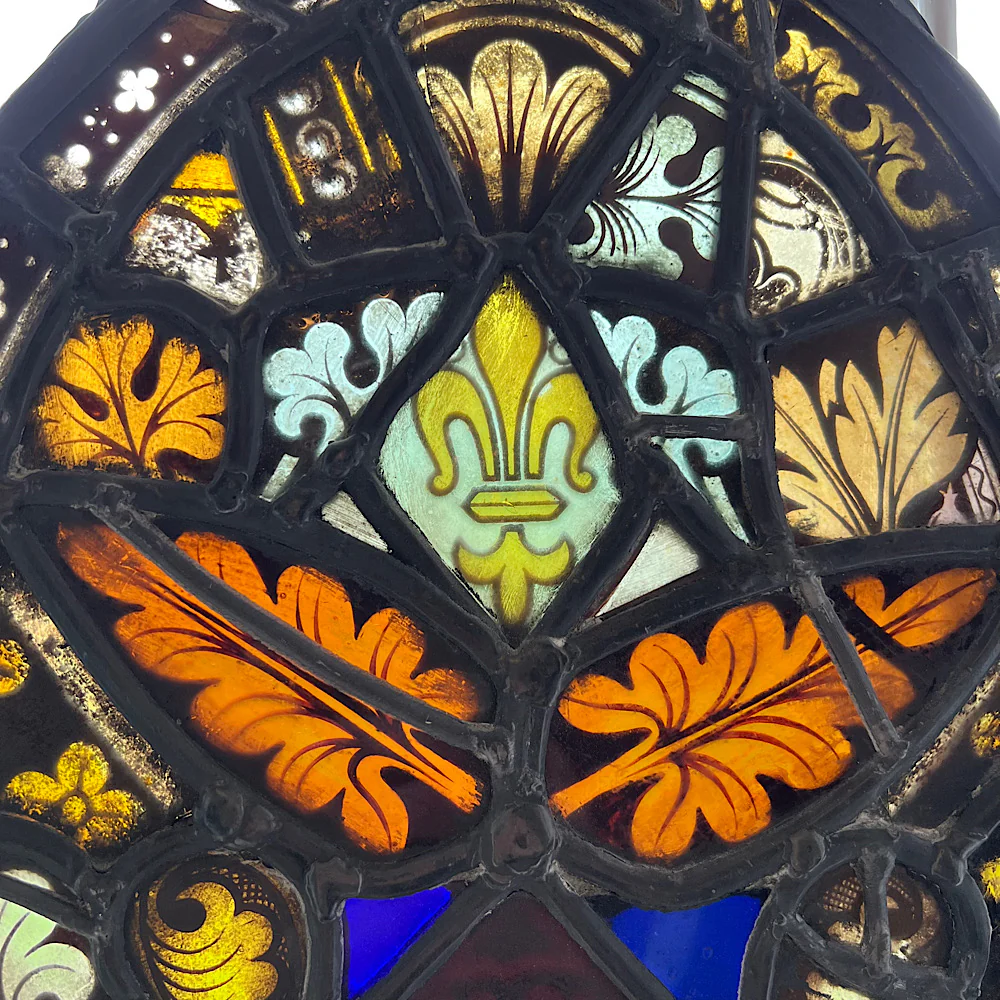
This magically beautiful stained glass composite window roundel dates to the 18th century and is arranged of fragments of Medieval stained glass that are most likely a combination of English and French pieces, dating between the 13th and 15th centuries.
England had a rich tradition of stained glass in the Middle Ages but much of it was destroyed by official government action or by iconoclastic fervour in the Reformation and Puritan period during religious conflicts that affected the British Isles in the 16th and 17th centuries and had a devastating effect upon the decorative arts and furnishings of the Christian church.
In the 18th century there was a new interest in medieval stained glass and by the following century much glass was being imported, unearthed in excavations or discovered in storage locations in the UK. Sadly, much of the old English stained glass only survives in a fragmentary state.
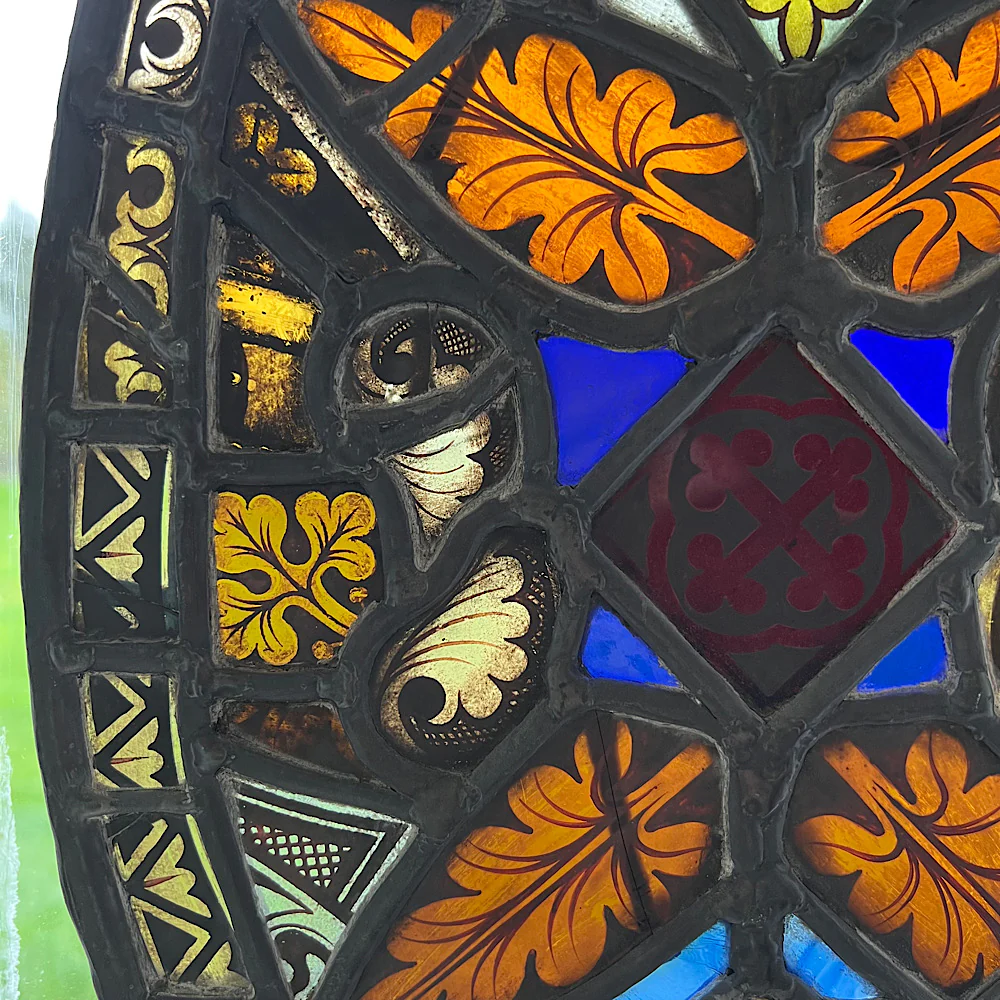
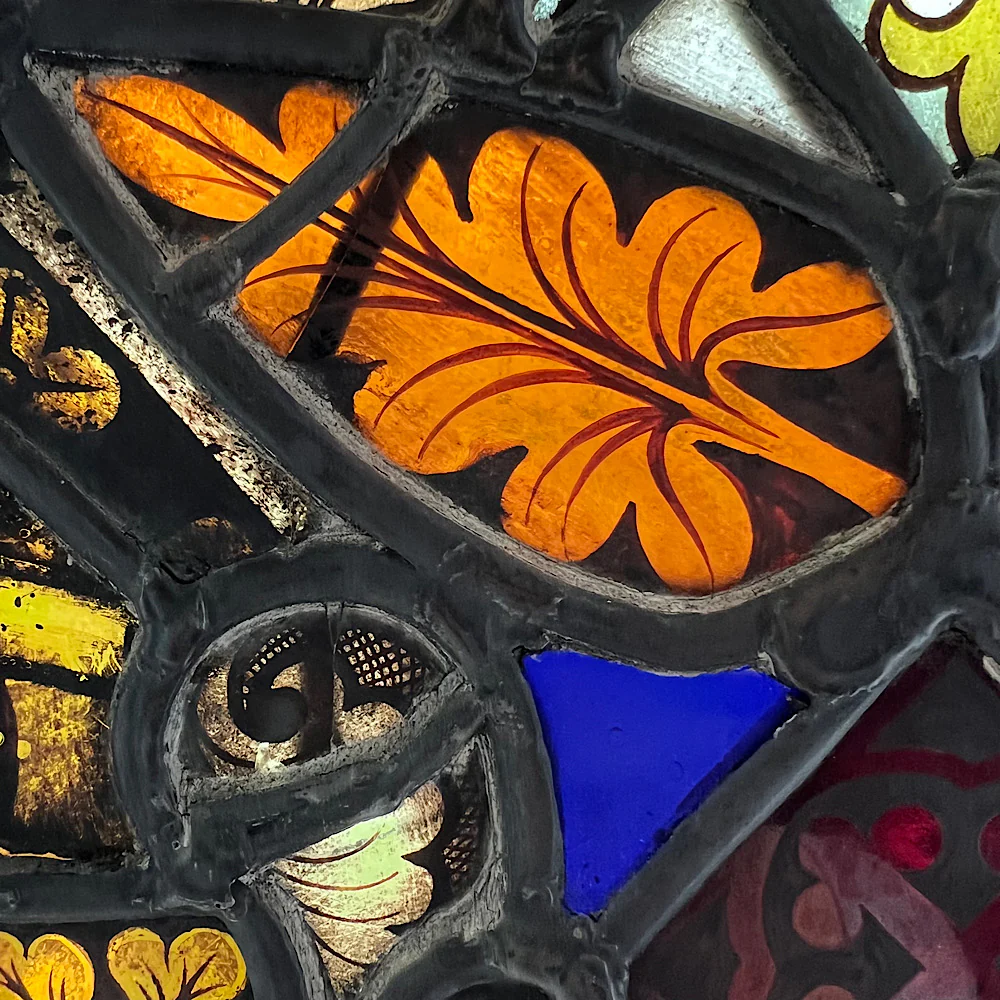
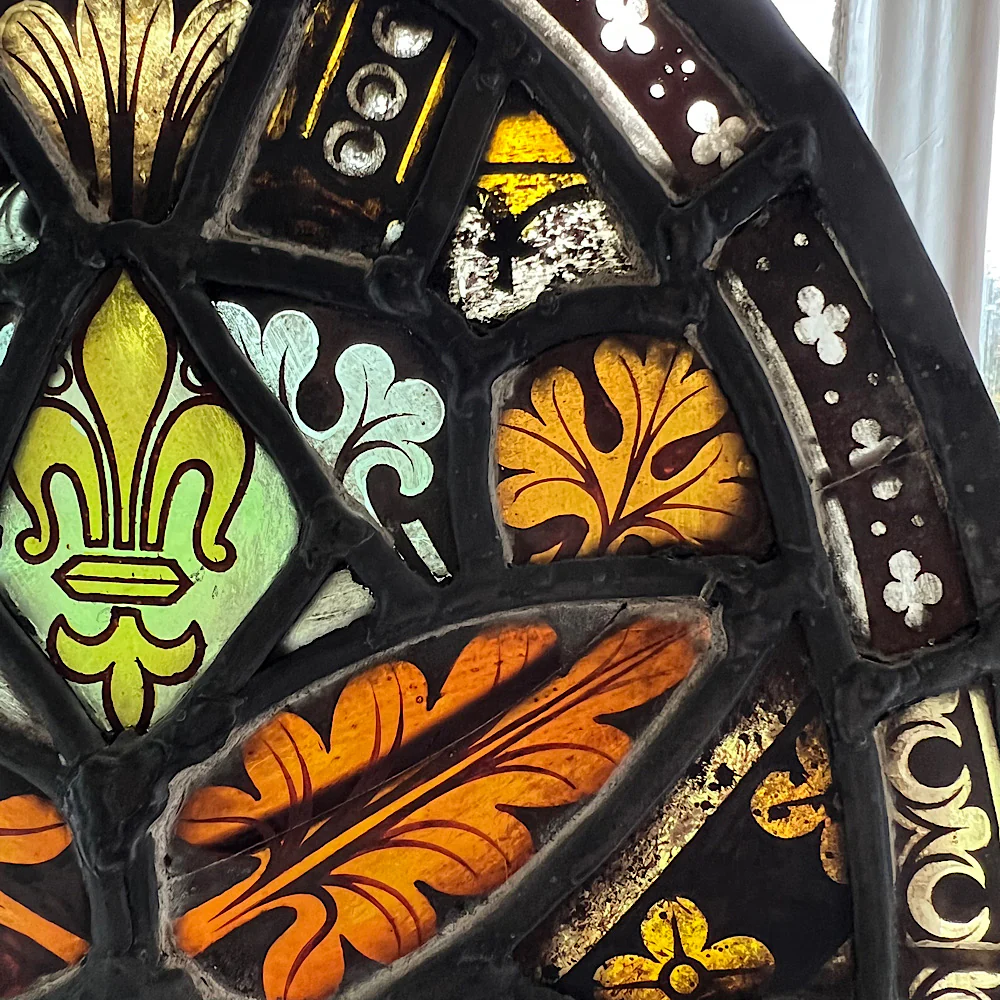
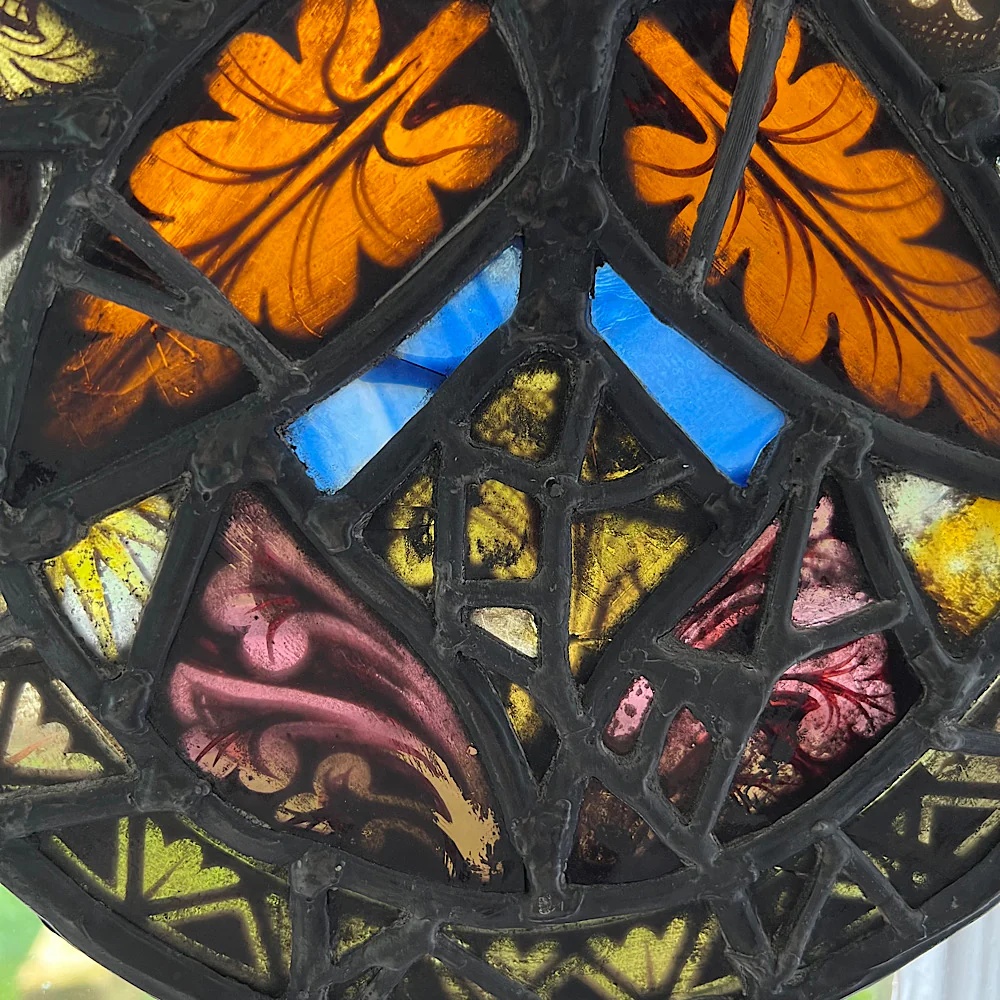
Our window incorporates different patterns of stylised flat leaves, fleur-de-lys and curling leaf forms and tendrils. Parts of the leaves and border fragments are painted on the reverse in yellow (silver) stain. Silver-stain that developed in the early part of the 14th century. It consisted of painting a compound of silver on the back of the glass which, after firing in a kiln, turned yellow and penetrated, stained, the upper layers of the glass. The front of the glass is covered in a thick coat of brown pigment, which was then picked out to reveal the leaf and stem design. This sort of decoration would have formed part of the background of a decorated stained glass panel. The combination of grisaille, ornamental non-figurative design painted in black line on colorless glass, silver stain, and coloured pop-glass is typical of the 14th and 15th centuries.












Description
This magically beautiful stained glass composite window roundel dates to the 18th century and is arranged of fragments of Medieval stained glass that are most likely a combination of English and French pieces, dating between the 13th and 15th centuries.
England had a rich tradition of stained glass in the Middle Ages but much of it was destroyed by official government action or by iconoclastic fervour in the Reformation and Puritan period during religious conflicts that affected the British Isles in the 16th and 17th centuries and had a devastating effect upon the decorative arts and furnishings of the Christian church.
In the 18th century there was a new interest in medieval stained glass and by the following century much glass was being imported, unearthed in excavations or discovered in storage locations in the UK. Sadly, much of the old English stained glass only survives in a fragmentary state.
Our window incorporates different patterns of stylised flat leaves, fleur-de-lys and curling leaf forms and tendrils. Parts of the leaves and border fragments are painted on the reverse in yellow (silver) stain. Silver-stain that developed in the early part of the 14th century. It consisted of painting a compound of silver on the back of the glass which, after firing in a kiln, turned yellow and penetrated, stained, the upper layers of the glass. The front of the glass is covered in a thick coat of brown pigment, which was then picked out to reveal the leaf and stem design. This sort of decoration would have formed part of the background of a decorated stained glass panel. The combination of grisaille, ornamental non-figurative design painted in black line on colorless glass, silver stain, and coloured pop-glass is typical of the 14th and 15th centuries.